Interior organisation
Preparation of bedrooms, living areas, guest spaces and family areas according to precise household standards.
A private housekeeper is responsible for the organisation, presentation and immaculate upkeep of a private residence. The role includes housekeeping standards, laundry, wardrobe care, room preparation and coordination with the household's routines.
In a high-end private home, this position requires discretion, method, attention to detail and the ability to understand the family's habits without overstepping the boundaries of private life.
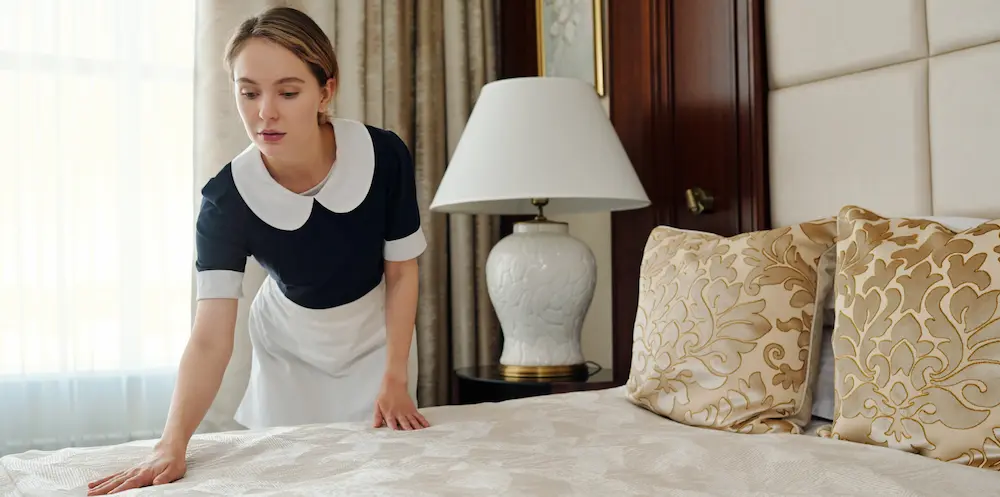
The private housekeeper ensures that the residence is clean, orderly, prepared and consistent with the family's standards. The role is not limited to cleaning. It includes observation, anticipation, quality control and organisation.
Depending on the size of the property, the housekeeper may work alone, supervise other household employees, liaise with external service providers or collaborate with an estate manager, a private butler, a caretaker couple, a private chauffeur or a private chef.
Preparation of bedrooms, living areas, guest spaces and family areas according to precise household standards.
Care of delicate fabrics, ironing, storage, wardrobe organisation and respect for personal belongings.
Follow-up of tasks, communication with other staff, preparation before family arrivals and supervision when required.
A private housekeeper works close to personal belongings and must show discretion, loyalty and professional distance.
Duties may include daily housekeeping, deep cleaning schedules, laundry care, wardrobe care, preparation of guest rooms, checking bathrooms, restocking household products, flower or table preparation, coordination of dry cleaning and communication with the family or estate manager.
In a luxury residence, the expected result is not only cleanliness. The home must feel prepared, calm and coherent. Details such as linen placement, guest amenities, wardrobe order, scent, lighting and readiness before the family returns can make a major difference.
A private housekeeper usually focuses on the practical running and presentation of the home. An executive housekeeper has a broader supervisory role. She may organise rotas, train other housekeepers and create checklists. She can also control quality standards, manage linen inventories, coordinate dry cleaning and report to the house manager or family office.
This distinction is important for recruitment. A family looking for cleaning, ironing and room preparation does not need the same profile as one seeking a senior housekeeper. The senior role may involve structuring a team across several residences. The title should reflect the responsibility, autonomy and management expected.
Daily cleaning, laundry, ironing, preparation of bedrooms, bathrooms and living areas.
Supervision, standards, team organisation, linen inventory, planning and quality control.
Useful when regular presence is required, especially in large properties or secondary residences.
Higher confidentiality, precision, communication and consistency are expected in international homes.
In UHNW families and international households, the private housekeeper must adapt to frequent travel, guests, seasonal stays and changing family schedules. The property may be located in Paris, the French Riviera, Provence, Monaco, Switzerland, London or several residences managed together.
The housekeeper may prepare the residence before the family's arrival, coordinate with a private nanny, support guest preparation, protect personal belongings and maintain the same standards even when the owners are away. In this context, discretion is not a bonus; it is part of the profession.
Salary depends on experience, references, property size, live-in or live-out status, hours, level of responsibility and location. An executive housekeeper supervising a team in a large property will generally be paid more than a housekeeper focused only on practical daily tasks.
For broader guidance, read our household staff salary guide. Compensation should always be confirmed according to the role, contract, location and applicable social rules.
Families should also consider whether the role includes accommodation, weekend presence, seasonal workload, travel, several properties or responsibility for other staff. These elements influence the salary package and help attract candidates with the right level of reliability and experience.
The right profile must be reliable, discreet, stable, well presented and able to work with method. References are important, but so is the ability to understand the household's rhythm, communicate with tact and maintain consistent standards over time.
Before recruiting, families should define whether the position is hands-on, supervisory, live-in, live-out, full-time, part-time, seasonal or connected to several residences.
A good recruitment brief should mention the property size, number of rooms, staff already in place, laundry expectations, wardrobe care, family presence, pets, guests, travel, accommodation and reporting line. This avoids confusion and allows the agency to present candidates whose experience genuinely matches the household.
A private housekeeper may work alongside a house manager or estate manager, an estate caretaker couple, a private nanny or a private butler. The wider team may also include a chef, private driver or personal assistant. Understanding these roles prevents one person from being given responsibilities that belong to several positions.
Our agency supports families seeking a reliable private housekeeper, executive housekeeper or household staff member for a high-end residence.
A cleaner usually performs defined cleaning tasks. A private housekeeper may manage the overall presentation of the home, laundry, wardrobes, daily organisation and sometimes coordination with other staff.
Yes. In larger residences, an experienced housekeeper or executive housekeeper can coordinate a team and control the quality of work.
No. The housekeeper focuses mainly on the interior and household standards. An estate manager has a broader operational role across the property, budgets, service providers and technical follow-up.
Yes. UHNW households often require excellent discretion, high presentation standards, careful wardrobe care, precise organisation and the ability to work with other private staff.
The brief should include property size, working hours, live-in or live-out status, laundry, wardrobe care, supervision, pets, travel, guests, reporting line and salary expectations.
Explore our guides on private household staff, salaries, estate care and recruitment.
 Published 15 May 2026
 Published 17 May 2026
 Published 14 May 2026
Our agency selects discreet, experienced and reliable profiles for private residences.