Main residence
Daily housekeeping, rooms, bathrooms, living areas, family spaces and the standards that make the home feel ready.
Private household recruitment
To recruit a private housekeeper is not only to find someone who can clean. Families who need to recruit a housekeeper or find a private housekeeper for a private residence or private property should define the role, household rhythm and employer budget before presenting candidates.
Discreet recruitment for families seeking a reliable housekeeper, with duties, rhythm and budget clarified before selection.
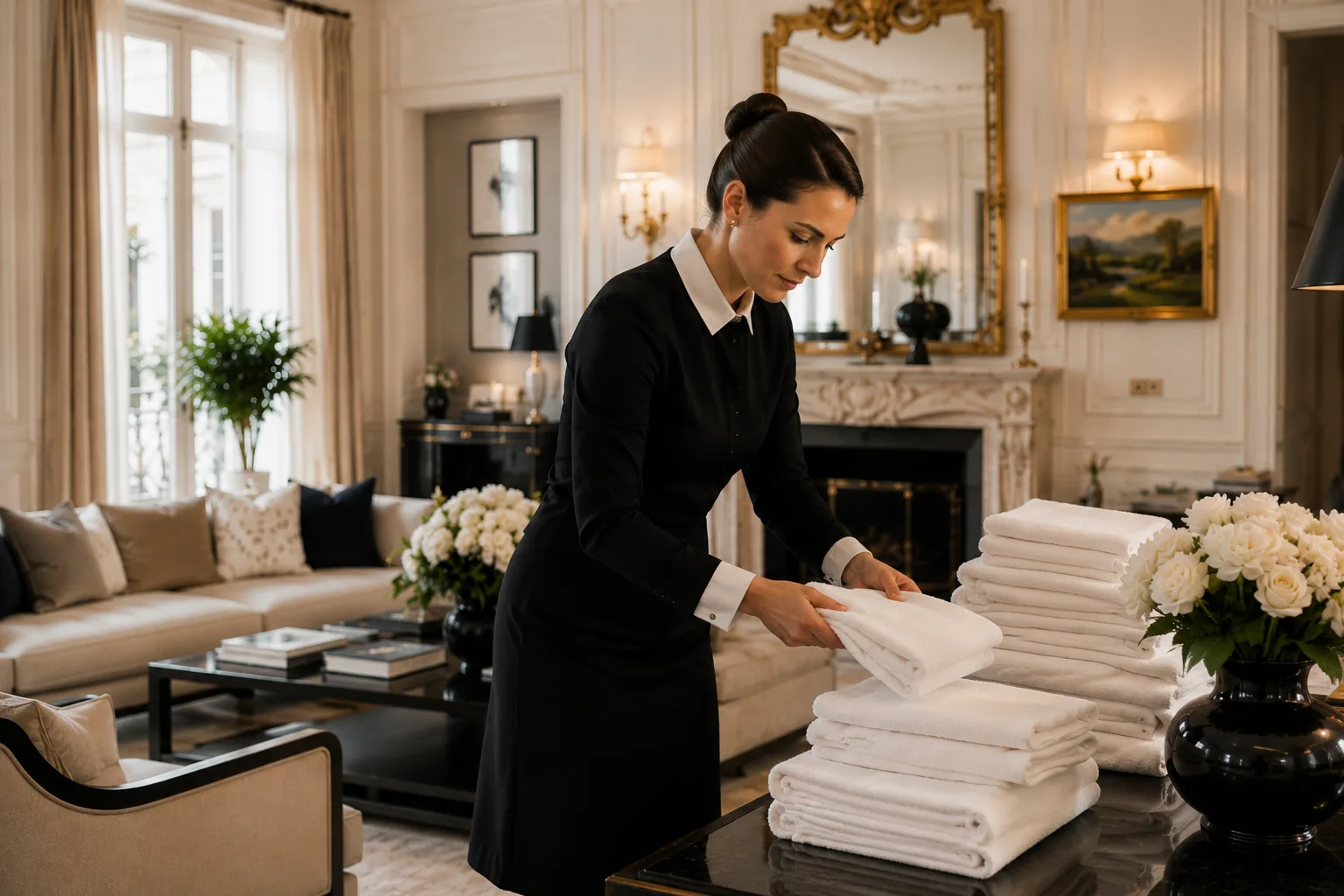
A private housekeeper keeps a residence clean, organised and ready for daily family life. The home is also prepared for guests, travel returns or seasonal stays. In a discreet household, the role often extends to laundry, delicate materials, guest rooms, storage and supplies. The housekeeper follows the routines and standards expected by the family.
For international families, family offices or high-end households, a housekeeper must also understand confidentiality, personal boundaries and the difference between a private home and a hotel environment. The best profiles bring method and consistency without disrupting the intimacy of the residence.
For a broader view of household recruitment, you can also visit our English page on household staff placement for families.
Daily housekeeping, rooms, bathrooms, living areas, family spaces and the standards that make the home feel ready.
Preparing the property before arrivals, resetting the residence after stays and coordinating seasonal priorities.
Care for linen, delicate fabrics, wardrobes, ironing, storage and seasonal rotation when required.
Respect for private spaces, family routines, confidential information and the personal rhythm of the household.
A private housekeeper must understand the difference between cleaning a space and maintaining the presentation of a residence. The role requires discretion, method and a steady sense of what the family expects day after day.
Bedrooms, living areas, guest spaces, surfaces and delicate materials should be handled with care, without disrupting the rhythm of the household.
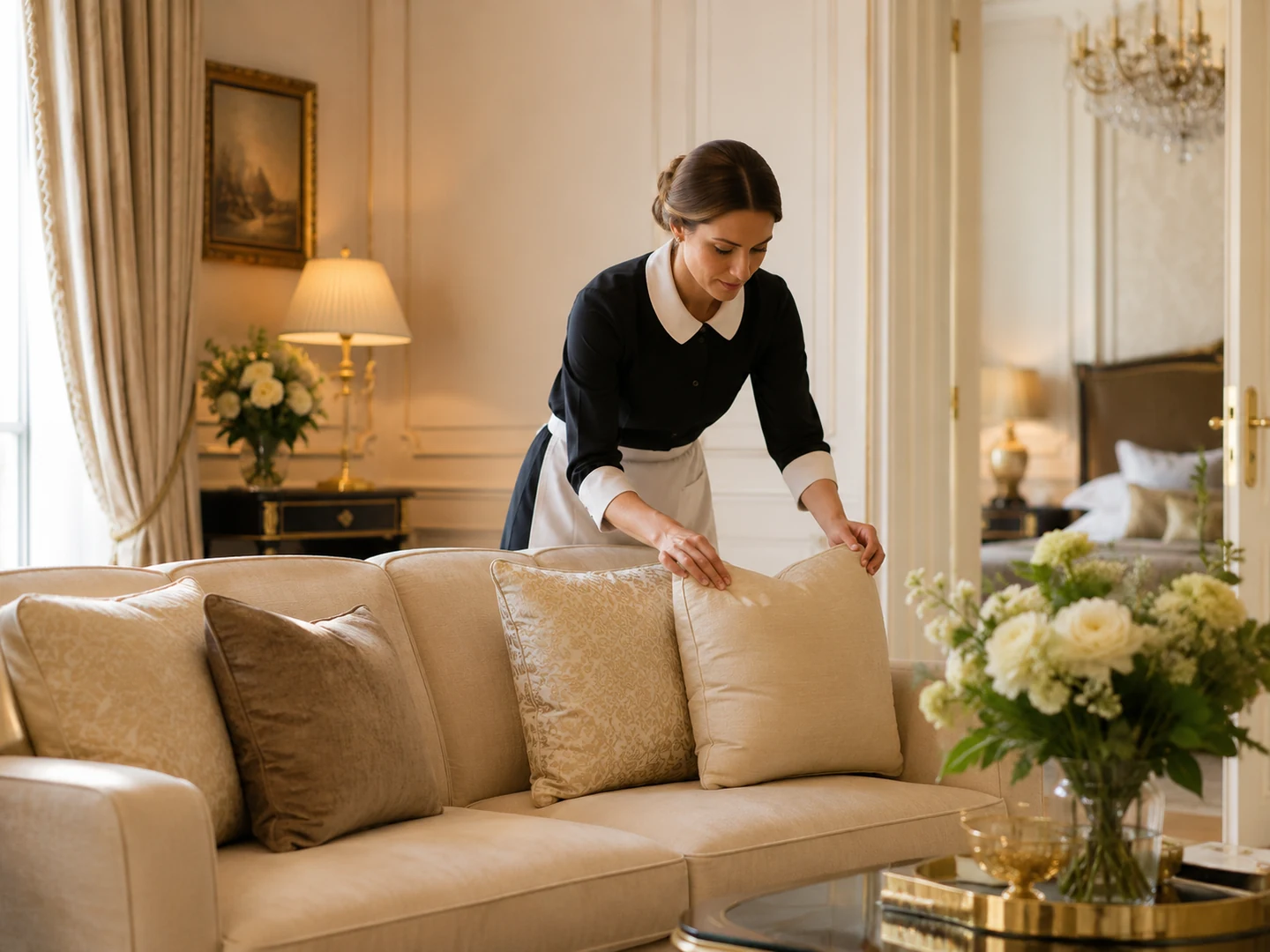
The duties should be clarified before the search begins. A private housekeeper may be responsible for daily housekeeping, bedrooms, bathrooms, guest areas, laundry, ironing, wardrobe care, household products, flowers, supplies, light preparation before arrivals and quality control after external service providers.
In larger residences, the housekeeper may work with an estate manager, personal assistant, chef, driver or other domestic staff. In smaller homes, the role can be more hands-on and polyvalent, but it should still remain realistic and clearly framed.
Hiring a housekeeper for a high-end residence is not only about operational tasks. The family usually expects a level of care that protects the house: surfaces, linen, wardrobes, guest rooms, storage, seasonal routines and the quiet details that make a home feel calm, ordered and ready.
When the role includes laundry or wardrobe care, the candidate must know how to handle delicate materials, respect preferences, organise closets, prepare luggage and keep track of household needs without turning the position into an undefined personal assistant role.
Cleanliness, presentation, attention to detail and the ability to maintain consistency without constant supervision.
Sorting, washing, ironing, folding, storage and care for delicate items, household linen and wardrobes.
Logical storage, products, guest preparation, seasonal rotation and discreet follow-up of what the household needs.
Clear communication with the family, estate manager, personal assistant, other staff or regular contractors.
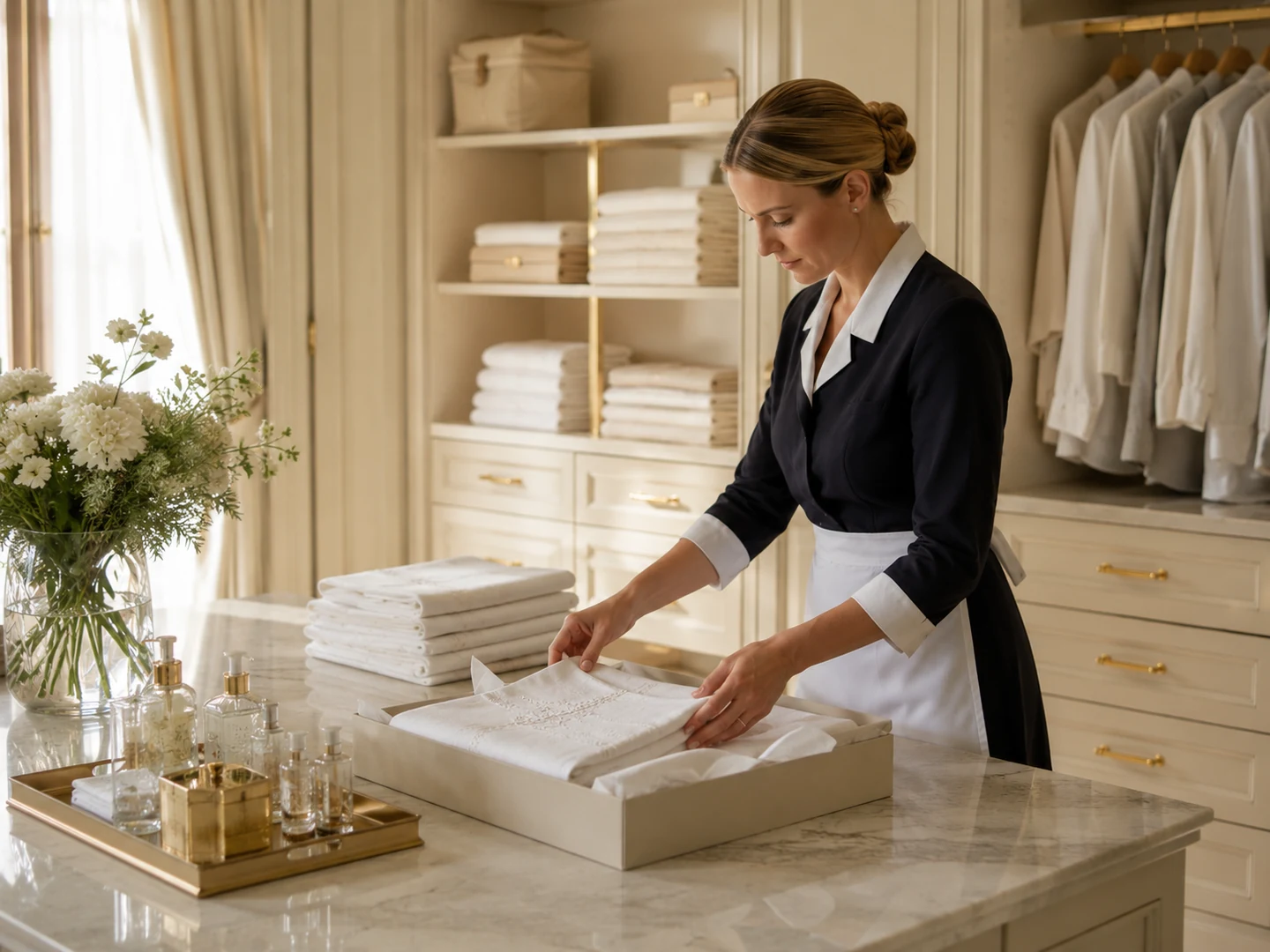
When laundry, wardrobes and delicate materials are part of the role, the brief should be explicit. The candidate must know what is expected, what should remain outside the role and how the family wants personal belongings handled.
This clarity protects both the household and the housekeeper, especially in high-end residences where privacy and consistency matter as much as technical skill.
The right profile depends on the size and number of rooms in the residence. Formality, travel patterns, guests, pets and laundry volume also shape the role. Live-in conditions and the presence of other household staff must be considered. A family apartment, villa and multi-residence household do not require the same kind of housekeeper.
Key qualities include reliability, discretion, practical intelligence, stability, attention to detail, experience in private homes or luxury hospitality, and the ability to adapt to the family's way of living. References matter: the role takes place at the heart of a private household.
Previous private households, long-term roles, luxury hospitality or similar environments with traceable references.
Discretion, punctuality, calm communication and the ability to work around family life with tact.
Understanding priorities, planning daily tasks and maintaining standards without constant direction.
A personality, pace and method that suit the household, not only a technically competent CV.
Salary depends on the country, schedule, experience and duties. Laundry responsibilities, property size, live-in or live-out conditions and expected autonomy also affect the budget. A live-in housekeeper for a large estate is not budgeted like a live-out housekeeper in a family apartment.
Families should also consider gross salary, employer contributions, accommodation, meals, travel between residences, weekends, overtime, benefits and the applicable employment framework. These figures are indicative and must be checked locally before making an offer.
A stable profile for daily housekeeping, laundry support and family routines in a clearly framed position.
Suitable for large residences, secondary homes or households requiring stronger presence and flexibility.
A senior profile can manage standards, priorities and communication with other staff or a family office.
The more autonomy, discretion, laundry expertise and flexibility the position requires, the more the compensation package must reflect the level expected.
The figures and categories above are guidance only. Before confirming an offer, families should verify the applicable employment law, payroll costs, working time, benefits, accommodation and tax/social contribution rules in the relevant country.
The first step is to define the household honestly: surface area, number of bedrooms, laundry volume, guests, pets, travel, other staff, reporting expectations, live-in arrangements and preferred working style. A vague job description attracts vague matches.
The second step is to check the candidate's background in context. A hotel profile can be excellent, but private households require different instincts: confidentiality, long-term trust, personal boundaries and the ability to work in intimate spaces without overstepping.
A successful search starts with a precise brief: rooms, laundry volume, guest frequency, other staff, reporting expectations, live-in conditions and the level of autonomy expected.
This helps the family compare candidates fairly and prevents the position from becoming an undefined mix of housekeeping, service, errands and personal assistance.
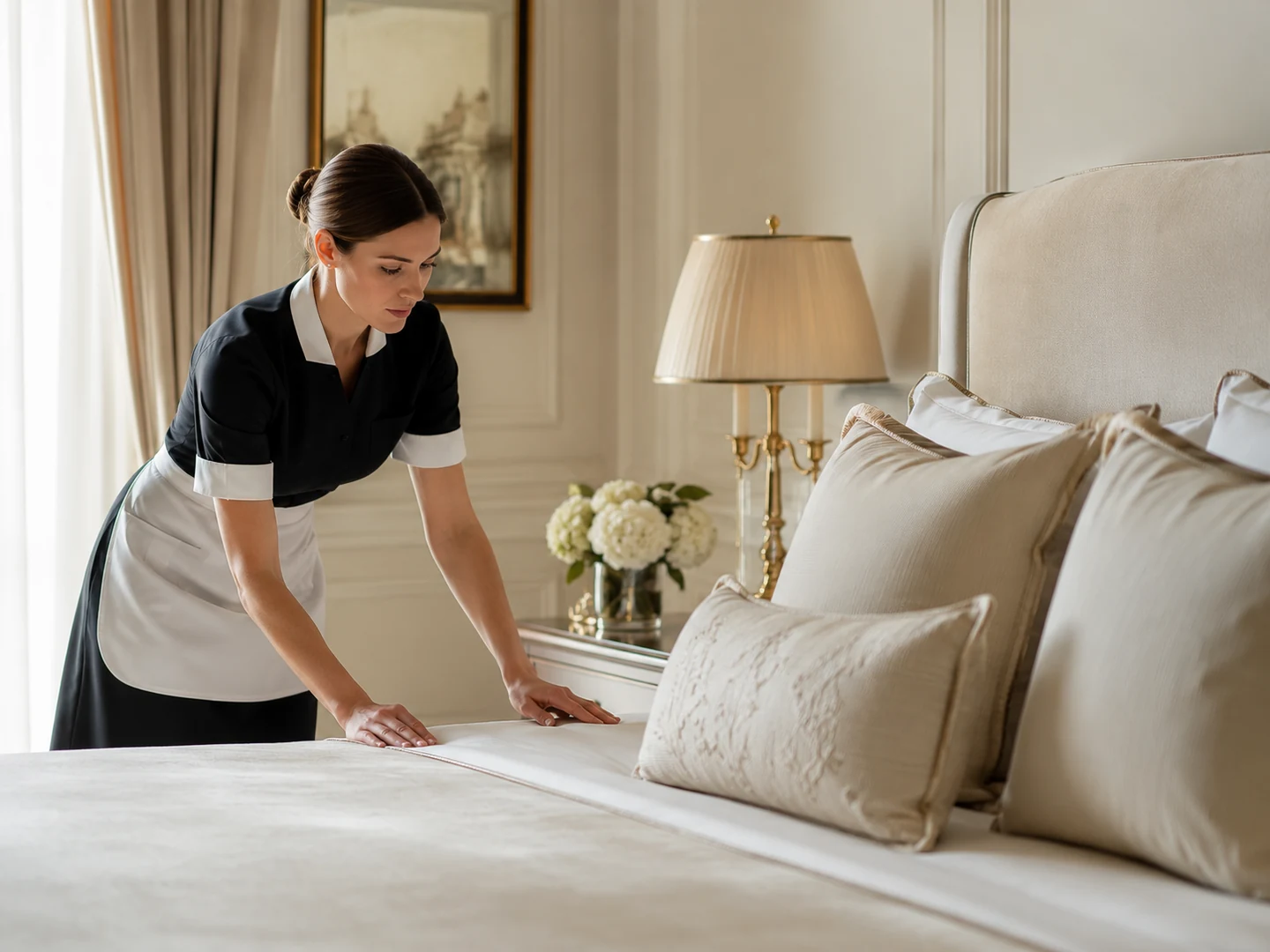
Housekeeping, laundry, guest rooms, products, errands, cooking boundaries, schedule and live-in conditions.
Previous families, length of service, type of residence, responsibilities, reliability and reason for leaving.
How the candidate communicates, protects privacy and understands the standards of a private household.
The best hire is not only competent; the person must fit the rhythm, expectations and values of the household.
A common mistake is to mix several roles into one unclear position: housekeeper, cook, nanny, personal assistant and estate support. Some candidates are versatile, but the priorities must be explicit or the role becomes unstable.
Another mistake is to underestimate the importance of references and long-term compatibility. A private housekeeper has regular access to personal rooms, family habits and sensitive information. Trust is part of the role.
Before launching a search, the family should be specific about the residence, the level of service, the schedule and the boundaries of the role. This helps attract candidates who can genuinely match the household.
Housekeeping only, laundry, wardrobe, guest preparation, errands, products, team coordination or wider support.
Full-time, part-time, live-in, live-out, weekends, seasonal peaks, travel or multi-residence arrangements.
Family habits, guests, pets, other staff, estate manager, family office or direct communication with principals.
Salary, employer cost, accommodation, meals, benefits, overtime, transport and annual planning.
To attract serious candidates, the position must be realistic and respectful. A strong private housekeeper will look for a clear household, fair conditions and a family that understands the value of trust and stability.
A housekeeper may be part of a wider private household team. Depending on the residence, a family may also need childcare support, a butler, a chef, a driver, an estate manager or a personal assistant. Each role should remain clearly defined.
The budget should distinguish salary, employer cost, working time, live-in or live-out conditions, meals, transport, benefits and the real level of responsibility given to the housekeeper.
These indications are not a formal quote. Final employer cost depends on the contract, working time, accommodation, duties, benefits, social contributions and the applicable legal framework.
A private housekeeper maintains the presentation, cleanliness and organisation of the residence. The role may include housekeeping, laundry, wardrobe care, guest rooms, supplies, preparation before arrivals and coordination with other household staff.
A cleaner usually focuses on cleaning tasks. A private housekeeper has a broader role, often including household organisation, laundry, presentation standards, guest preparation, stock follow-up and discreet adaptation to the family's routines.
Both models can work. The right choice depends on the residence, schedule, level of presence required, accommodation, privacy, travel patterns and the family's expectations.
The budget depends on the country, working time, live-in or live-out conditions, experience, duties, benefits, employer contributions and the applicable employment framework.
Yes, a senior private housekeeper may coordinate cleaners, laundry providers, contractors or other household staff, but this responsibility should be written clearly into the role.
A specialist agency helps clarify the brief, check references, filter unsuitable profiles and introduce candidates who understand discretion, standards and the rhythm of a private household.
Our agency can support a discreet search for an experienced housekeeper suited to your residence, standards and household rhythm.
Contact the agency