Daily presence for an elderly person
Conversation, reading, walks, simple meals, outings and a stable presence can make daily life calmer.
Non-medical daily support
Find, hire and recruit a private companion carer or elderly companion for an elderly or fragile person in a private residence. Yann & Lise International supports families seeking daily support, a reassuring presence and verified profiles.
A private companion carer or elderly companion can support daily life, provide a reassuring presence, help with light organisation and complement family or medical arrangements, without replacing qualified healthcare professionals.
Families usually hire a companion carer to protect an elderly person's rhythm, reduce isolation, organise daily routines and provide calm reassurance at home. The role remains non-medical and must be clearly framed.
The right profile knows how to be present without taking over, support without infantilising, maintain social connection and communicate useful information to relatives. In a private residence, discretion and reliability are as important as experience.
Conversation, reading, walks, simple meals, outings and a stable presence can make daily life calmer.
Reminders, appointments, nearby errands, correspondence and day planning are handled within the family framework.
The person keeps familiar habits, human contact and as much autonomy as possible.
An elderly companion is generally focused on presence, conversation, walks, outings and social connection. This can be ideal when the person remains relatively autonomous but needs a trusted profile nearby.
A private companion carer may provide broader daily support: simple meals, light organisation, appointments, non-medical observation, family coordination and adaptation to the person's rhythm. The scope must remain realistic and compatible with the person's skills.
This position is not a nursing role. Medical acts, nursing care, regulated healthcare duties and clinical decisions must remain with qualified professionals.
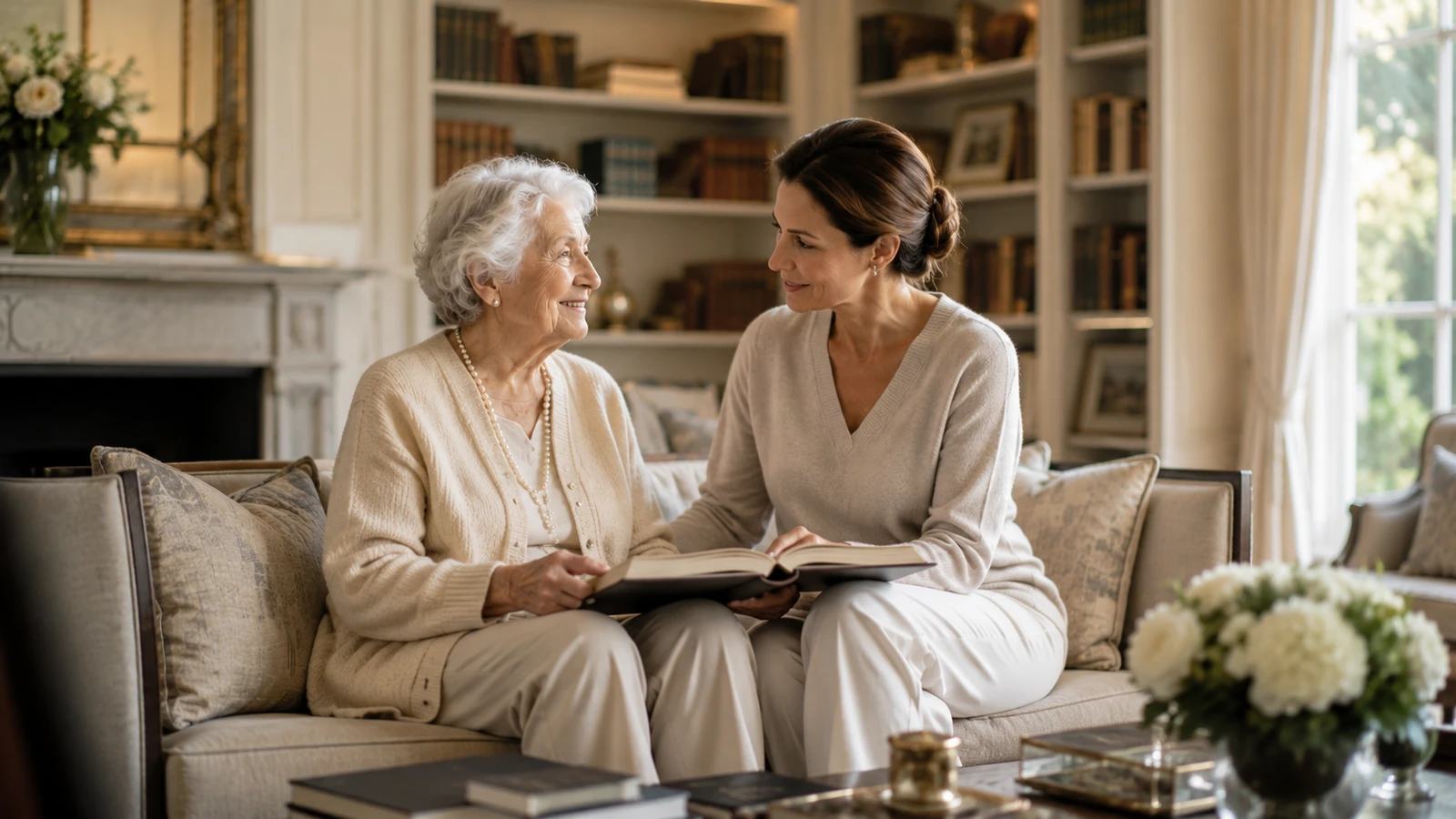
A stable presence helps the person keep familiar routines, confidence and a living connection with relatives.

The role should define what is shared, with whom, how often and within which confidentiality boundaries.
The right profile depends on autonomy, temperament, habits, family context and the expected level of presence. Experience matters, but human compatibility is often decisive.
Verified references help confirm stability, punctuality, discretion and respect for private household boundaries.
The rhythm can range from a few visits per week to daily support, depending on the real family need.
Accommodation must be compatible with rest time, privacy and a clear non-medical role.
Finding a private companion carer or elderly companion requires a careful understanding of the family context. The search must take into account the person being supported, the home's routines, relatives involved, existing professionals and confidentiality expectations.
Yann & Lise International selects verified profiles, reviews relevant experience and helps the family compare shortlisted candidates. The aim is to present a focused selection that fits the home's rhythm and the person's temperament.
Patience, listening skills, kindness, punctuality, observation and respect for dignity help create a lasting relationship without invading private life.
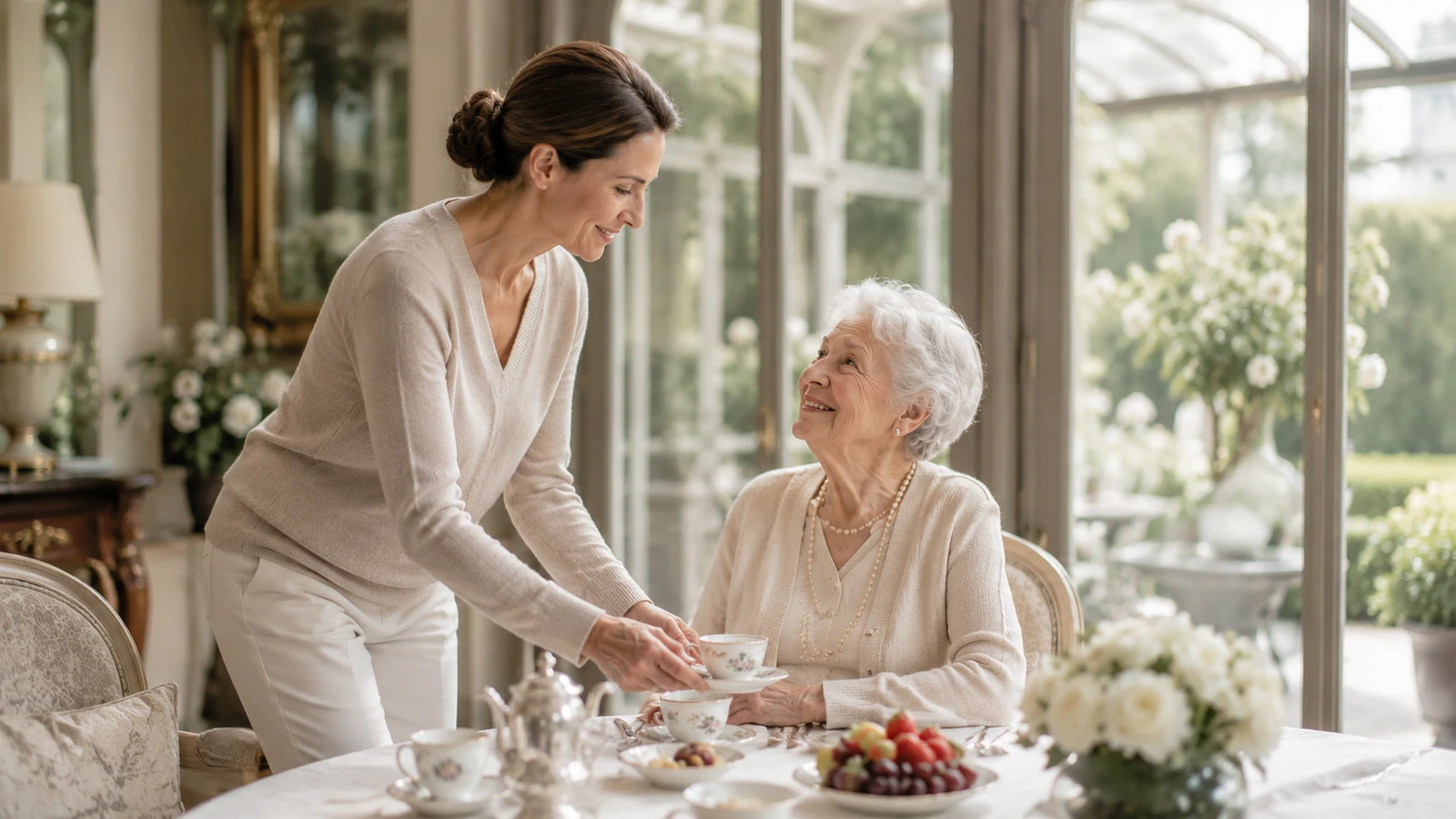
A private companion carer or elderly companion can work in a main residence, secondary home, family apartment, villa or private estate. Location changes the organisation. Access, travel, accommodation, seasonal presence, family relay and coordination with household staff must all be considered.
In a secondary home, the search should anticipate stays, arrivals, departures, existing healthcare appointments, outings and presence needs. In a main residence, compatibility with daily rhythm often becomes the central criterion.
The search should clarify whether the role is seasonal, regular, live-in, mobile or organised around family stays.
The framework must define information shared with relatives, autonomy of the role and confidentiality limits.
The budget depends on working hours, experience, location, night presence, weekends, possible accommodation, travel and the emotional responsibility of the role. It should be assessed before the search begins.
For regular visits, conversation, outings, simple meals or occasional family relay.
To be framed according to the family need.
For light organisation, outings, simple meals and communication with relatives.
A personalised estimate is recommended.
For more structured daily presence, complementing the family or existing professionals.
Total cost should be assessed before the search.
For some families, accommodation can help organise presence, but it must not erase rest time.
The framework must be precise.
These indications do not replace a personalised estimate. Search fees and conditions are clarified before the mission begins.
Before launching the search, the family should describe the person's daily rhythm, sensitive moments, preferred activities, role limits and expected relationship with relatives.
The first mistake is to search for one person who can do everything: companionship, housekeeping, driving, medical supervision, administration and permanent availability. A vague role attracts unsuitable profiles and weakens the relationship.
The second mistake is to underestimate human compatibility. The elderly person must accept the presence, feel respected and keep dignity. Selection should therefore check experience as well as temperament.
Yann & Lise International helps families recruit a private companion carer or elderly companion for an elderly or fragile person. Searches are conducted according to the locations currently covered by the agency and the required profile.
The need may be occasional, regular, full-time, live-in or live-out. In every case, success depends on a clear framework, verified profiles and careful attention to the human relationship.
Recruitment should define duties, hours, non-medical limits, family coordination, confidentiality and total budget.
A companion carer may provide broader daily support and light organisation, within the agreed role. An elderly companion is usually focused on presence, conversation, outings, reassurance and social connection.
Yes. A private companion carer can work in a private residence, main home or secondary home when duties, hours, access rules and confidentiality expectations are clearly defined.
Yes. Yann & Lise International qualifies the family context, clarifies the expected rhythm and searches for a stable, discreet and compatible profile for the elderly person.
Yes. We review relevant experience, references, stability, punctuality, discretion, communication and the ability to work respectfully in a private household.
No. This page refers to non-medical daily support and companionship: reassuring presence, light organisation, outings, simple meals and family coordination. Medical acts, nursing care and regulated healthcare duties must be handled by qualified healthcare professionals.
Yes. The search can be tailored to a part-time, full-time, regular, live-in or live-out arrangement, depending on the family need, accommodation, rest time and applicable legal framework.
Placement fees depend on the search scope, profile, working hours, location and level of support required. They are clarified before the mission begins.
Yes. The agency supports the family with role definition, profile selection, reference checks and comparison of shortlisted candidates before hiring.
Yann & Lise International helps families select discreet, reliable and verified profiles for non-medical daily support and companionship in private residences.