Child safety
Daily care, safety, meals, sleep rhythm, hygiene and age-appropriate routines.
Private nanny recruitment
When a family needs to recruit a private nanny or find a private nanny for a private residence, the role must combine childcare expertise, discretion, reliability and a strong sense of responsibility.
In HNWI, UHNW, international or expatriate families, the nanny helps protect the child\'s wellbeing, daily rhythm, development and safety while adapting to the private property, household standards and family routines.
Discreet recruitment for families seeking a reliable nanny, with duties, rhythm and budget clarified before selection.
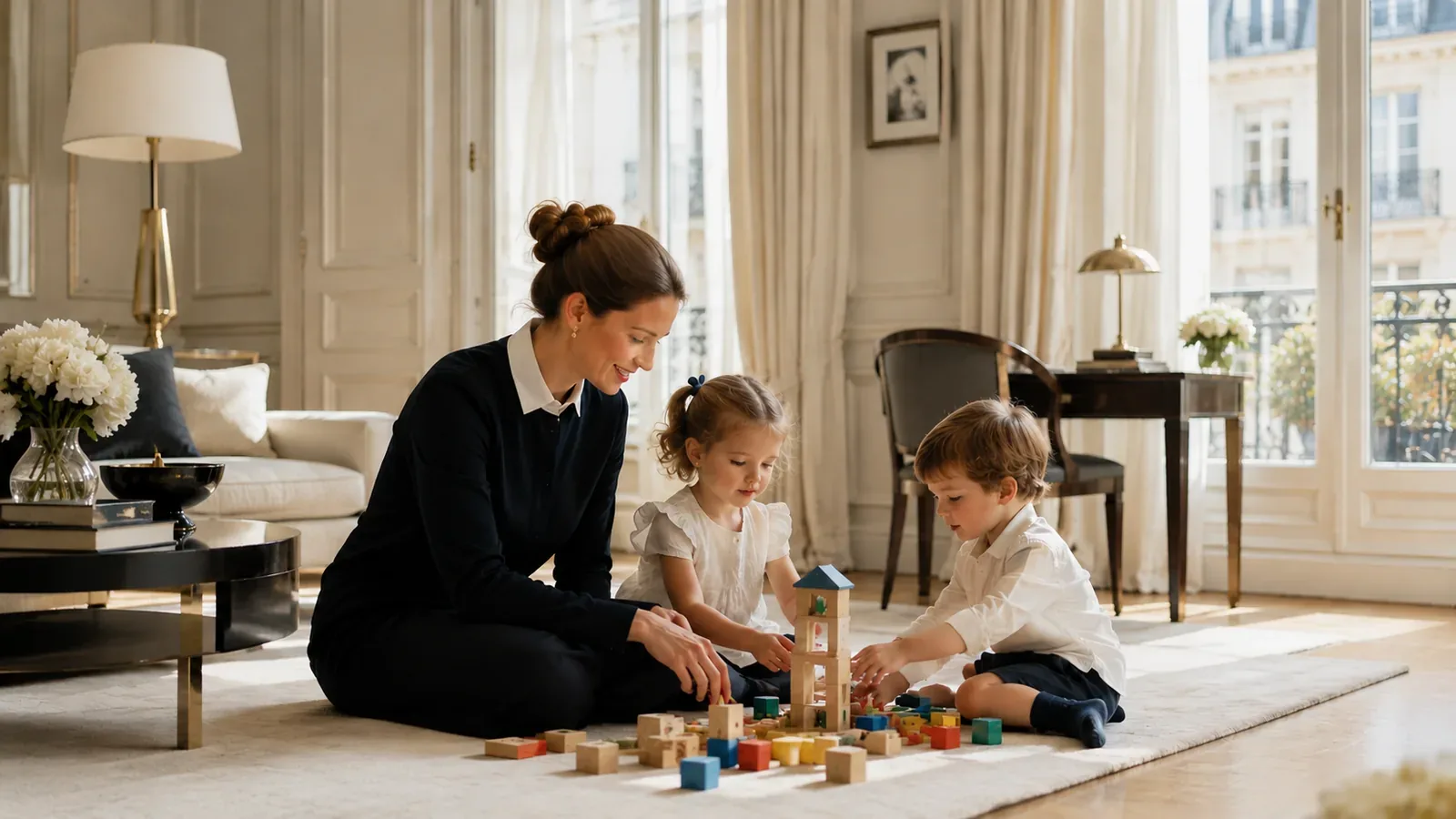
The role of a private nanny goes far beyond simply supervising children. A nanny may organise morning and evening routines, school runs, meals, homework, play activities, travel preparation, appointments and daily communication with parents. Depending on the age of the children, the role may involve babies, toddlers, school-age children or teenagers.
In a high-end household, a nanny must also understand confidentiality, discretion and the importance of a calm, professional presence. She or he may work alongside a private housekeeper, a private butler, a private chauffeur, a personal assistant or an estate manager.
Daily care, safety, meals, sleep rhythm, hygiene and age-appropriate routines.
Activities, homework, language exposure, manners, autonomy and family values.
School runs, appointments, packing, travel preparation and coordination with parents.
A luxury nanny works inside the family's private life and must respect confidentiality at all times.
A private nanny must understand the practical life of the household: sleep, meals, outings, school runs, activities, travel preparation and clear communication with the parents.

Every family has a different organisation. Some families need a daily nanny, others require a bilingual nanny, a live-in nanny, a travelling nanny, a maternity nanny or a rota nanny. The right profile depends on the number of children, the rhythm of the household, travel frequency, language needs and the level of independence expected.
A live-in nanny is provided with accommodation by the family, either inside the main residence or in separate staff housing. The arrangement requires clear rules regarding privacy, working hours, rest time and compensation.
A rota nanny works in rotation with another nanny. This model is common in international families, UHNW households and situations requiring continuity with a demanding schedule.
A travelling nanny accompanies the family on holidays, business trips and stays in secondary residences. She prepares children's luggage, activities, documents and daily routines while travelling.
A maternity nanny supports parents during the first weeks or months after birth, helping with newborn care, feeding routines, sleep rhythm and reassurance.

Accommodation, travel, school holidays, evening support and rest time should be clarified from the start so the role remains attractive, realistic and sustainable.
In UHNW and international households, the private nanny must often combine childcare expertise with flexibility, excellent presentation, discretion and the ability to work within a fully staffed residence. The nanny may travel with the family, coordinate with schools, tutors, personal assistants, drivers, housekeepers and estate managers, while keeping the child's routine stable.
These families may divide their time between Paris, London, Monaco, Switzerland, the French Riviera, Provence or other international destinations. The nanny should therefore be comfortable with travel preparation, passport and luggage checks, child-friendly activities abroad, jet lag, security routines and communication with parents who may have demanding schedules.
For expatriate and multilingual families, language skills can be a major selection criterion. English-speaking, French-speaking or bilingual nannies may support communication, homework, routines and cultural adaptation.
A luxury nanny salary depends on experience, references, languages, qualifications, number of children, hours, travel, live-in accommodation, rota schedule and the level of responsibility. A bilingual or rota nanny working for an international family will usually command a higher salary than a standard daily childcare position.
For a broader view of compensation and private household roles, families can also read our household staff salary guide and our household staff recruitment hub. Salary ranges should always be treated as guidance only. Final compensation depends on the role, location, contractual framework and applicable social regulations.
The salary package should reflect the reality of the role: school runs, evenings, weekends, holiday travel, overnight stays, rota organisation, live-in accommodation, number of children, language expectations and the level of educational support required. A clear salary structure helps attract stable candidates and avoids misunderstandings after hiring.
The figures below are indicative and must be adjusted to the contract, country, working hours, accommodation, travel, benefits and applicable regulations. They help families understand the difference between net salary and the wider employer budget before starting the search.
For a family with regular hours, school runs, daily routines and child-focused support.
EUR 2,300 to 3,200 net / monthIndicative employer cost: EUR 4,000 to 5,800 / month.
For a role involving accommodation, language skills, autonomy, travel or higher responsibility.
EUR 3,000 to 4,200 net / monthIndicative employer cost: EUR 5,500 to 7,800 / month.
For mobile families, rotation, frequent travel, extended availability or multi-residence organisation.
EUR 4,000 to 6,000 net / month and aboveIndicative employer cost: EUR 7,500 to 11,000 / month and above.

A clear position attracts stronger candidates: hours, rest time, accommodation, travel, languages and the exact scope of duties should be defined before interviews.
Recruiting a private nanny requires more than checking availability. The family must verify experience, references, stability, discretion, childcare skills, communication style, driving ability where required, language level and capacity to adapt to the family's educational values.
It is also important to clarify the precise expectations before presenting candidates: schedule, number of children, travel, sleepovers, live-in or live-out arrangement, language needs, household rules and relationship with other staff members.
A strong nanny recruitment brief should mention the children's ages, school rhythm, languages, travel frequency, medical or dietary requirements, family values, screen-time rules, driving needs, homework expectations and the level of communication expected from the nanny.
Yann & Lise International supports families seeking a qualified nanny by defining the role, analysing the household organisation, selecting relevant profiles and presenting candidates whose experience and personality match the family's needs. This approach helps avoid rushed recruitment and protects the quality of the long-term relationship.
The nanny must also fit into the wider household structure. In some homes, she will work closely with a private housekeeper, a house manager, a private butler, a personal assistant, a driver or an estate caretaker couple. Clear boundaries between childcare and household duties make the position healthier and more sustainable.
A strong shortlist should show proven childcare experience, verifiable references, discretion, emotional maturity and a natural fit with the family's educational choices.

Our agency supports families seeking a discreet, experienced and reliable nanny for a private household, a secondary residence or an international lifestyle.
The budget should distinguish net salary, indicative gross salary, employer cost, accommodation, travel, weekly hours and the real level of responsibility given to the nanny.
A luxury nanny usually works in a high-end private household and combines childcare expertise with discretion, flexibility, excellent presentation and the ability to adapt to demanding family routines.
The budget depends on experience, weekly hours, number of children, live-in accommodation, travel, languages, rota organisation and the level of responsibility required by the family.
Yes. Many private nanny positions include live-in accommodation or travel, but working hours, rest time, privacy, accommodation and expenses should be clearly defined before hiring.
A rota nanny works on a rotating schedule with another nanny, often in international households that need continuity, flexibility and a high level of availability.
The brief should include the children's ages, schedule, travel, languages, live-in or live-out status, school runs, homework, meals, driving, salary and relationship with other household staff.
An agency helps define the role, assess experience, verify references and present profiles that are consistent with the family's standards, rhythm and privacy expectations.
Our agency selects experienced, discreet and reliable profiles for private families.